The spa town of Bad Düben—the gateway to the Dübener Heide—lies at the intersection of the cities of Leipzig, Lutherstadt Wittenberg, and the Renaissance town of Torgau. It is surrounded by the heathland of the same name and the largely unspoiled floodplain landscape of the Mulde River, which winds along the western outskirts of the town toward Goitzsche and the Muldestausee. The Dübener Heide Nature Park, with its extensive woodlands, stretches north and east of the town all the way to Kemberg and Bad Schmiedeberg.
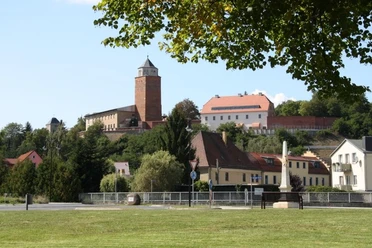
The town’s history can be traced back to the year 981, when a castle named “Dibni” was mentioned in written sources. After frequent changes of ownership and its complete destruction during the Saxon Civil War, Düben Castle became the administrative seat of the Düben district in 1531, before briefly serving as the headquarters of the French Emperor Napoleon Bonaparte in the fall of 1813.
Today, the renovated half-timbered building houses the Dübener Heide Regional Museum, which provides insight into many aspects of the history as well as the flora and fauna of this unique heathland area.
A special attraction in the castle garden is one of the last surviving ship mills in Germany, which was first mentioned as early as 1686 and has been tirelessly drawing its energy from the river ever since. Of the town’s five mills, the Dübener Stadtmühle still grinds flour for local bakers. Built in 1538 as the electoral official grain mill, it was formerly powered exclusively by water. The millyard of the historic Obermühle watermill—first mentioned in records around 1434—invites us today to experience traditional craftsmanship. The Düben post mill greets guests approaching from Wittenberg from a distance, and the Sommerfeld post mill in Tiefensee is a popular destination on Mill Day, the region’s largest folk festival.
An abundant supply of peat led to the establishment of a peat bath over 100 years ago. The healing properties of the peat are still highly valued today at the HEIDE SPA Hotel & Resort spa and wellness center. Here, you can immerse yourself in Saxony’s expansive wellness world, be pampered from head to toe, and enjoy bathing culture in a sophisticated atmosphere. From the new four-star wellness hotel, you can access the individual wellness and experience areas directly via a bathrobe corridor. You can learn a lot of interesting facts about this natural remedy during a tour of the peat experience garden. Once you arrive at the moor mud pool, it’s time to take off your socks and shoes and feel the invigorating effect for yourself.
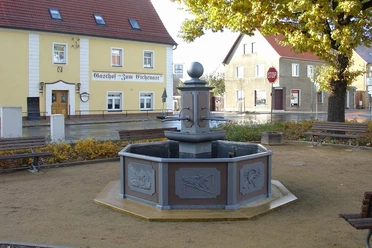
On a stroll through the adjacent spa park, you can wander along historic paths and enjoy peace and nature. The spa park was established as early as 1848 as one of the first public parks in Germany. With its fountains, flower and rhododendron beds, small therapeutic facilities, barefoot path, and magnificent old trees, it is an idyllic oasis of relaxation.
The historic old town is just a short walk away via the Kur-Stadt-Weg. Lovingly restored buildings housing small, charming shops, cafés, and restaurants with cozy outdoor seating promise a treat for both the eyes and the palate.
The town hall on the market square, restored just a few years ago, surprises visitors with an amusing eye-catcher. Much to the delight of visitors, time here literally ticks differently: at the top of every hour, two billy goats appear beneath the town hall clock and butt heads to the sound of the bell.
At the foot of the castle stands the NaturparkHaus, which houses the offices of the Dübener Heide e. V. association. The association brings the building to life with special exhibitions, cultural and scientific events, and a nature conservation station.
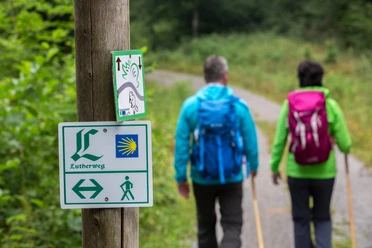
From here, over 500 km of signposted trails lead nature lovers and those seeking relaxation to the region’s most charming destinations.
The town’s history can be traced back to the year 981, when a castle named “Dibni” was mentioned in written sources. After frequent changes of ownership and its complete destruction during the Saxon Civil War, Düben Castle became the administrative seat of the Düben district in 1531, before briefly serving as the headquarters of the French Emperor Napoleon Bonaparte in the fall of 1813.
Today, the renovated half-timbered building houses the Dübener Heide Regional Museum, which provides insight into many aspects of the history as well as the flora and fauna of this unique heathland area.
A special attraction in the castle garden is one of the last surviving ship mills in Germany, which was first mentioned as early as 1686 and has been tirelessly drawing its energy from the river ever since. Of the town’s five mills, the Dübener Stadtmühle still grinds flour for local bakers. Built in 1538 as the electoral official grain mill, it was formerly powered exclusively by water. The millyard of the historic Obermühle watermill—first mentioned in records around 1434—invites us today to experience traditional craftsmanship. The Düben post mill greets guests approaching from Wittenberg from a distance, and the Sommerfeld post mill in Tiefensee is a popular destination on Mill Day, the region’s largest folk festival.
An abundant supply of peat led to the establishment of a peat bath over 100 years ago. The healing properties of the peat are still highly valued today at the HEIDE SPA Hotel & Resort spa and wellness center. Here, you can immerse yourself in Saxony’s expansive wellness world, be pampered from head to toe, and enjoy bathing culture in a sophisticated atmosphere. From the new four-star wellness hotel, you can access the individual wellness and experience areas directly via a bathrobe corridor. You can learn a lot of interesting facts about this natural remedy during a tour of the peat experience garden. Once you arrive at the moor mud pool, it’s time to take off your socks and shoes and feel the invigorating effect for yourself.
On a stroll through the adjacent spa park, you can wander along historic paths and enjoy peace and nature. The spa park was established as early as 1848 as one of the first public parks in Germany. With its fountains, flower and rhododendron beds, small therapeutic facilities, barefoot path, and magnificent old trees, it is an idyllic oasis of relaxation.
The historic old town is just a short walk away via the Kur-Stadt-Weg. Lovingly restored buildings housing small, charming shops, cafés, and restaurants with cozy outdoor seating promise a treat for both the eyes and the palate.
The town hall on the market square, restored just a few years ago, surprises visitors with an amusing eye-catcher. Much to the delight of visitors, time here literally ticks differently: at the top of every hour, two billy goats appear beneath the town hall clock and butt heads to the sound of the bell.
At the foot of the castle stands the NaturparkHaus, which houses the offices of the Dübener Heide e. V. association. The association brings the building to life with special exhibitions, cultural and scientific events, and a nature conservation station.
From here, over 500 km of signposted trails lead nature lovers and those seeking relaxation to the region’s most charming destinations.

LEIPZIG REGION
Author
Kathleen Schramm
Organization
LEIPZIG REGION
License (master data)
Kathleen Schramm